
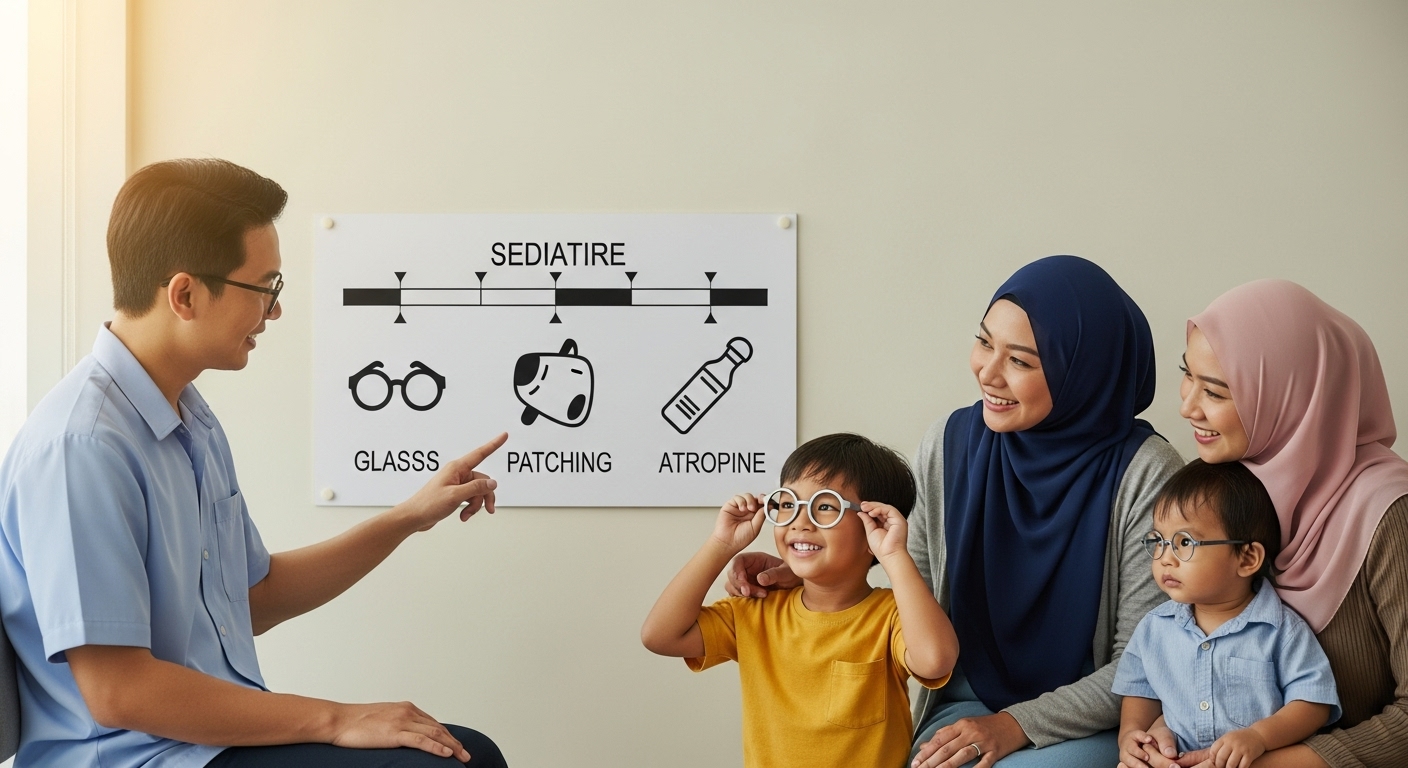
Wondering how long amblyopia (lazy eye) treatment takes—and whether glasses, patching or atropine is the right first step? At Dr Diyana Eye Specialist Clinic, we map out a clear, age-appropriate treatment timeline that usually begins with full-time glasses wear to give the weaker eye a crisp image, then adds occlusion therapy (patching) or atropine penalisation if vision isn’t catching up as expected. We explain each stage, set realistic milestones, and coach parents on comfort tips and fun near activities so therapy stays on track. You can see how we structure visits and follow-ups in our paediatric eye care service, and learn why precise, up-to-date prescriptions are essential under refractive error. If this is your first step or you need to restart after a break, book a baseline vision assessment through general eye services—and when you’re ready for a personalised plan with clear timelines, book a consultation so we can guide your child from glasses to patching or atropine as needed.
Why A Clear Timeline Matters
Amblyopia (lazy eye) improves best when treatment begins early and follows a structured plan, because the visual system is most “plastic” in childhood. Parent guides from the American Academy of Ophthalmology and the NHS explain why consistent glasses wear and timely therapy are key to long-term vision. We map this out at your first visit within paediatric eye care and schedule convenient reviews via general eye services.
Step 1 — Precise Glasses Correction (Often The First Big Win)
For many children, full-time glasses wear is the essential first step. Clear, equal images to both eyes can improve vision on their own—sometimes substantially—so we start with accurate refraction and fitting under refractive error. We usually allow a period of consistent wear before adding other therapy, and we coach families on comfort, frame choice and handling so glasses stay on during school and play.
Step 2 — If Vision Still Lags: Patching Or Atropine
If the weaker eye is still behind after the glasses phase, we introduce occlusion therapy (patching) or atropine penalisation. Overviews from the NHS treatment guide and AAO patient information outline how both methods encourage the brain to use the amblyopic eye. We’ll help you choose:
- Patching: a breathable, skin-friendly patch covers the stronger eye for planned periods while your child does near activities (reading, colouring, tracing) to actively engage the weaker eye.
- Atropine drops: a small dose in the stronger eye blurs near focus so the weaker eye works harder—useful for families who struggle with patch adherence.
We set realistic schedules, provide comfort tips, and integrate therapy into home and school routines through paediatric eye care.
Follow-up Cadence and How We Track Progress
We review vision at regular intervals to confirm improvement and adjust the plan. Typical check-ins assess visual acuity, fixation preference, alignment and adherence. If patching is used, we watch for rare issues like occlusion amblyopia in the patched eye and adjust hours accordingly; with atropine, we discuss light sensitivity and reading strategies. Appointments are easy to schedule via general eye services, and we align them with school terms whenever possible.
Home Program That Keeps Therapy On Track
Success rises with enjoyable routines. We provide activity packs for patch time, recommend reward charts, and share skin-care tips for patch comfort. For atropine days, we suggest sunglasses or a cap outdoors and good reading light. When prescriptions change, we update glasses promptly within refractive error so progress isn’t limited by outdated lenses.
What If Progress Plateaus?
If improvement stalls, we re-check the glasses prescription, examine for strabismus or suppression, fine-tune patching/atropine schedules, and ensure activities are suitably challenging. Evidence summaries from the American Association for Pediatric Ophthalmology and Strabismus (AAPOS) note that alternating or combining strategies can help some children. We’ll discuss options in clinic and, if needed, coordinate additional tests within paediatric eye care.
When and How We Taper (And Prevent Relapse)
Once the weaker eye reaches a stable level, we taper therapy rather than stopping abruptly to lower the small risk of relapse. We’ll set a gradual step-down plan and space reviews further apart while keeping a close eye on alignment and day-to-day function. If signs of regression appear, we act early with a brief “booster” phase.
Special Situations We Plan For
- School & sports: we choose schedules and patching windows that fit classroom work and co-curriculars; teachers can be given a friendly note if helpful.
- Skin sensitivity: we recommend hypoallergenic patches and rotation tips; if needed, we pivot to atropine.
- Older children & teens: while earlier is best, many still improve with consistent care; we’ll set expectations and focus on adherence strategies.
- Coexisting issues: when refractive updates or ocular surface problems affect comfort, we address them promptly within refractive error and the broader paediatric eye care pathway.
When To Seek A Sooner Review
Book an earlier visit if you notice a new eye turn, worsening head tilt, persistent headaches/eye strain, falling school performance related to vision, or poor tolerance to patching or drops. Quick adjustments often restore momentum and avoid frustration.
Your Next Step
If you’re ready for a clear, family-friendly amblyopia timeline—from precise glasses to the right mix of patching or atropine—schedule a baseline assessment through general eye services. We’ll personalise the plan inside paediatric eye care, keep prescriptions accurate with refractive error, and set milestones you can actually follow at home.
FAQ
What usually comes first—glasses, patching or atropine?
We typically begin with full-time glasses wear to give both eyes a clear image; many children improve noticeably at this stage. If the weaker eye still lags, we add patching or atropine as outlined in our paediatric eye care pathway, and we keep the prescription precisely updated under refractive error.
How long does treatment take?
Improvements can start within weeks, but therapy often continues for several months with regular check-ins. We’ll set milestones at each visit and adjust the plan as your child progresses; you can book convenient follow-ups via general eye services.
How many hours of patching are needed?
It depends on age and severity. We prescribe a tailored schedule (e.g., part-day patching with engaging near activities) and review vision regularly in paediatric eye care to fine-tune hours and prevent over-patching.
What side effects can atropine cause, and how do we manage them?
Atropine in the stronger eye can cause light sensitivity and near blur. We plan reading strategies, good lighting and sunglasses for outdoors, and we monitor closely within paediatric eye care while keeping glasses updated via refractive error.
Will my child need to wear glasses full-time?
If unequal focus contributed to amblyopia, full-time glasses wear is usually essential. We explain frame choices, fit and durability, and keep prescriptions current under refractive error so therapy isn’t held back by outdated lenses.
How do we keep patching on track without tears and tantrums?
We use reward charts, fun near activities and comfort tips for the skin, then adapt schedules around school and sports. If adherence is tough, we may pivot to atropine—all coached step-by-step in paediatric eye care.
What if progress plateaus?
We recheck the glasses prescription, review alignment, and adjust patching or atropine schedules. If needed, we add targeted activities to challenge the weaker eye and schedule tighter follow-ups through general eye services.
Can amblyopia come back after we stop?
A relapse can occur, especially after rapid gains. We reduce risk with a tapered step-down and periodic reviews in paediatric eye care so we can intervene early if vision starts to slip.
When should we come in sooner?
Book an earlier visit if you notice a new eye turn, worsening head tilt, persistent headaches/eye strain, or poor tolerance to patching or drops. Same-week checks are easy to arrange via general eye services.
A clear, family-friendly amblyopia treatment timeline starts with precise glasses, then adds patching or atropine only when needed—tracked with milestones you can actually follow. Explore the step-by-step pathway in paediatric eye care, keep prescriptions accurate with refractive error, and book reviews conveniently through general eye services. Ready to begin? Book a consultation and we’ll personalise your child’s plan from glasses to patching or atropine with clear targets at every step.
This article is for informational purposes only and should not replace professional medical advice. Please consult with qualified healthcare professionals for personalized medical guidance.